The Imperfect ideals of a protagonist
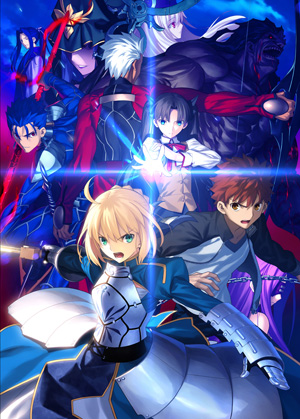
“Fate Stay Night” is a vastly popular fictional series written by Kinoko Nasu, who has included elements of history and myths from various time periods and regions. The most basic plot summary in most of these series is about 7 mages taking part in the grail war where the victor gets to have their wish granted.

But the war is never the main focus of these stories. It is just a mechanism that drives the characters forward. The “Fate series” has gained its popularity through its excellent interactions and their development throughout the series.
Let’s talk about two such characters. The protagonist and antagonist of the starting series “Fate Stay Night”, Shirou Emiya and Gilgamesh. One who is the embodiment of justice shown by his ideals and the other who is the embodiment of pride and selfishness shown by his absolute sense of self satisfaction.
Even though on the surface the protagonist seems like a classic hero and the antagonist a classic villain of the story, they are actually multi-layered in their world views and personalities.

source: Pinterest
Archer who is the version of Shirou who blindly continued to walk on the path of his borrowed ideals faced nothing but torment in his life and even after his death. This Shirou abandoned his personal life and identity completely to focus on keeping Kiritsugu’s dream alive, even going so far as to making a deal with the Counter Force to give him the power to keep protecting people in exchange for working as a counter guardian after his death.
This deal did not go well for him as he quickly realized that the counter force’s way of keeping peace and preserving the human race was to eliminate both the given threat and any and all bystanders, innocent or otherwise.
He was continuously sent to different time periods and alternate timelines to kill off thousands of people for the sake of humanity as a whole. This clearly went against his ideals as he had to work restlessly as a machine to do the exact opposite of what he thought what saving humanity ment.
Throughout his countless years working as a counter guardian he realized the same thing his father Kiritsugu did all those years ago. That in order to save someone countless other sacrifices had to be made.
Realizing that the ideals that lead him onto this path were fake he got an opportunity to free himself when he got summoned into the grail war and saw his younger self.

source: FateUBW episode 7
And that is the aspect of Shirou that I can not agree with. His delusion of being the savior caused by refusing to let go of a dream that isn’t even his own. Walking the path of self destruction even after knowing the outcome and even repeating it the exact same way just because he refuses to believe that he will fail. Ultimately he is a selfish character who won’t deny his ideals even if it means letting go of his loved ones and his identity itself.
Now speaking of selfishness and identities, Gilgamesh, the king of heroes, is the embodiment of self. Gilgamesh from Fate is an altered version of the actual Gilgamesh from the story “The Epic of Gilgamesh”.

Gilgamesh or Gil for short, is a king from ancient Mesopotamia and as king he truly believes and expects everyone else to also believe that his words are law. The most accurate way to describe him would be as a king who rules selfishly and only for his own pleasure. His rule can only be considered tyrannical as he considers everyone below him.
Gilgamesh hates the modern world he got summoned into because he’s disappointed seeing how people have lost their purpose, become lazy and aimless. Though he views himself superior to everyone else he does not disregard or disrespects potential.
Gilgamesh is an extremely prideful and egotistical ruler, however he won't deny showing respect to people who truly deserve his respect. That is why he respected Iskander, another hero of legend who has accomplished great feats in history, in their duel.
However he refuses to respect Shirous goal. To Gilgamesh Shirou has no self worth as he has no purpose of his own. Shirou is a fake according to Gilgamesh as to him the ideal way to live life is to live it to the fullest accomplishing everything that one may desire.
Unlike Shirou, Gil only looks at the bigger picture. In his words, he does not care for a single human life but rather the potential of humanity as a whole. And to achieve that potential he rules his subjects according to what he thinks best disregarding whatever sacrifice others have to make.
Narratively Gilgamesh is the complete opposite to Shirou. One chasing a fleeting dream that may never come true where the other does not dream but rather simply acts on his whims.
One who is selfless to a selfish extent and the other who holds himself above all others simply because he has the ability to back up his position.

source: FateStrangeFake Trailer
Even if Gilgamesh is considered the villain in the story, he is the most true to himself in the whole cast. He doesn't care about winning the war because he has no use for the wish that the grail can grant. Instead he does what he thinks is the most entertaining. He simply lives to the fullest without a care for anyone else.

Comments
Post a Comment